Safer Floors: The Women and Non-Binary Promoters Rewriting Nightlife's Rules From the Door In
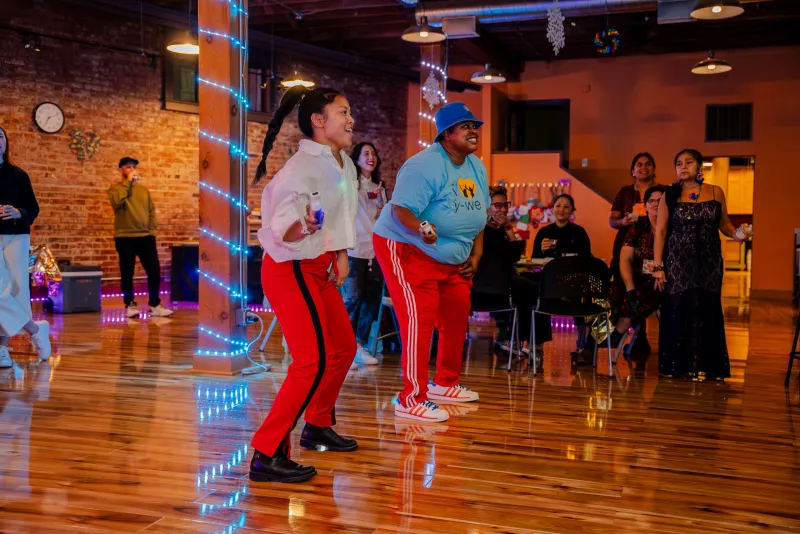
Photo: diverse women nightlife event organizers club safety empowerment, via youngwomenempowered.org
Walk into the right party in Brooklyn, Chicago, or LA these days and something feels different before the music even hits you. Maybe it's the way the door staff actually makes eye contact and checks in rather than just scanning your ID. Maybe it's the clearly posted consent policy near the bar. Maybe it's the designated safe space room staffed by a trained volunteer, or the text line plastered on the bathroom wall for anyone who needs help without having to flag someone down in a loud room.
These aren't accidents. They're the result of intentional, often painstaking work by a generation of women and non-binary promoters and venue operators who decided that if the culture wouldn't protect people on the dancefloor, they'd build the infrastructure to do it themselves.
This is not a trend piece. It's a reckoning with who gets to feel safe in electronic music spaces — and who has always had to fight for that right.
What the Old Nightlife Model Got Wrong
For decades, the default power structure in American nightlife was pretty legible: male promoters, male bookers, male venue owners, male DJs. Women and queer people showed up to dance. They weren't expected to run the room.
That structure created blind spots that cost people real harm. Harassment went unaddressed because the people with authority either didn't see it as their problem or actively benefited from a culture of permissiveness. Venues prioritized profit over patron welfare. Door policies were enforced inconsistently, often in ways that reflected racial and gender bias. And when something went wrong — and it did, regularly — the response was usually silence, victim-blaming, or a quiet ban that protected no one.
"The venues I came up in weren't built with me in mind," says Daniela Cruz, a queer Latina promoter who now runs events in Chicago's underground house scene. "They were built for a certain kind of person to have a certain kind of night. If you didn't fit that mold, your safety was kind of on you."
Cruz is one of a growing number of organizers who stopped waiting for the industry to fix itself and started building alternatives.
Protocols That Actually Work
The safety measures being implemented by women and non-binary promoters vary in form but share a common philosophy: proactive care over reactive damage control.
Many are starting with staff training. Partnering with organizations that specialize in bystander intervention — groups like Right To Be (formerly Hollaback!) or local sexual violence advocacy nonprofits — they're running mandatory workshops for door staff, bartenders, and floor teams before every event series. The goal isn't just to teach people what to do when something happens. It's to shift the culture so that intervention feels normal, expected, and supported.
Others are implementing tiered consent education at the point of ticket purchase — not as a legal disclaimer, but as a genuine statement of community values. "We're clear about what our events are and what they're not," says Jordan Myles, a non-binary DJ and promoter based in Brooklyn who runs a monthly deep house night. "When you buy a ticket, you're agreeing to be in a space where we take care of each other. That sets a tone before anyone walks in the door."
Venue layout is another lever being pulled. Safer parties tend to feature better lighting in hallways and bathrooms, clearly marked exits, accessible water stations, and designated chill-out areas staffed by people trained in first aid and de-escalation. It sounds like basic event management. But for underground parties that have historically operated in the legal gray zones of warehouses and loft spaces, it represents a significant operational investment.
Community Accountability Over Cancel Culture
One of the most interesting — and frankly, most difficult — aspects of this movement is its approach to accountability. Rather than defaulting to public callouts or quiet blacklistings, many of these organizers are experimenting with restorative and transformative justice models.
The idea is that a simple ban rarely addresses root causes or provides any closure for the person who was harmed. Community accountability processes — which can involve structured conversations, mediated meetings, and conditions for re-entry into a scene — are more labor-intensive, but organizers who've used them say they're more effective at actual culture change.
"We've had situations where someone did something harmful and the community wanted blood," Cruz says. "But the person who was hurt didn't necessarily want that. They wanted to be believed and they wanted something to change. Those aren't the same outcome."
This approach is not without its critics. Some argue it places too much burden on survivors to participate in processes that can be retraumatizing. The honest answer from organizers doing this work is that there's no perfect model — only a commitment to keeping the harmed person's needs at the center of whatever happens next.
The Vetting Question
Perhaps the most structurally significant shift is happening at the booking level. Women and non-binary promoters are increasingly implementing vetting practices for the artists and vendors they work with — checking references, consulting with other organizers about past behavior, and in some cases, requiring artists to sign behavioral agreements as part of their contracts.
This is genuinely new territory for an industry that has historically treated artist behavior as a private matter, something to be managed quietly if at all. The idea that a promoter has the right — or the responsibility — to vet a headliner's track record off the decks is still controversial in some circles. But among the organizers leading this movement, it's non-negotiable.
"Your lineup is a statement of your values," says Myles. "You can't build a safe event and then hand the night over to someone with a known history of predatory behavior. That's a contradiction."
The network effects of this approach are significant. As more promoters share information and coordinate on vetting, the informal blacklists that have always existed in nightlife are becoming more formalized — and more enforceable.
What This Means for the Broader Scene
The protocols being pioneered by these organizers are starting to ripple outward. Some established venues in New York, Chicago, and Los Angeles are adopting elements of these frameworks after seeing them succeed at independent events. Larger festivals have begun consulting with grassroots safety collectives. And a new generation of promoters coming up in the scene is treating these practices not as optional add-ons but as baseline requirements.
What's happening here is a power transfer. Not dramatic or instantaneous, but real. The people who have always had the most to lose in unsafe nightlife spaces are taking structural control over how those spaces operate. And in doing so, they're making the dancefloor a better place for everyone — including the people who never thought they needed protecting in the first place.
The house is getting its house in order. It's about time.