Bedroom Beats Going Viral: Meet the Gen-Z Producers Flipping House Music on Its Head
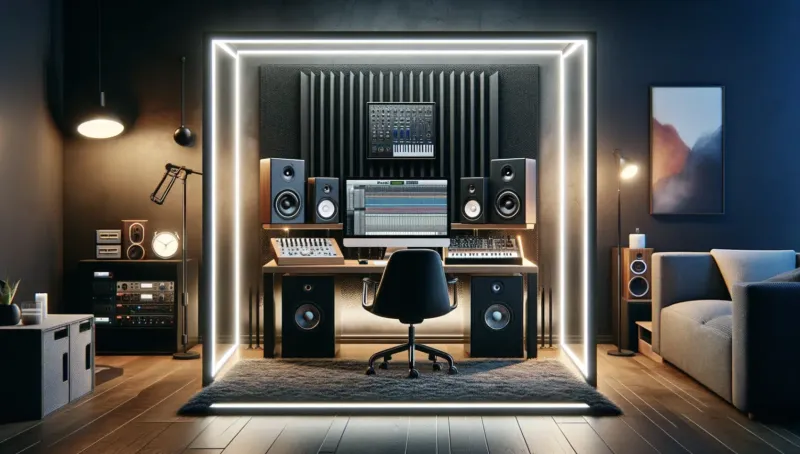
Photo: young producer home studio laptop music production bedroom setup, via unison.audio
Kira Delacroix is 21 years old, lives in her parents' house in Columbus, Ohio, and has a SoundCloud following larger than most regional DJs who've been grinding for a decade. Her setup: a used MacBook Pro, Ableton Live, a $200 MIDI keyboard, and a pair of studio headphones she bought with birthday money at 17. Last spring, a snippet of her track "Glass Ceiling" circulated through TikTok's electronic music corner and racked up over 800,000 plays in a week. Her inbox has never recovered.
"I didn't even have a finished version of that song when it blew up," she says, laughing. "I had to scramble to actually complete it because people were asking where they could buy it."
Kira's story isn't unique — it's becoming the template. Across the US, a generation of producers who grew up streaming DJ sets on YouTube and watching tutorial breakdowns on Reddit are now making house music that's turning heads at the highest levels of the industry. And they're doing it with setups that would've been laughed out of a professional studio fifteen years ago.
The Gear Barrier Has Officially Collapsed
To understand why this moment is different, you have to understand how much the economics of music production have shifted. In the early 2000s, putting together a home studio capable of producing professional-quality electronic music required a serious financial investment — hardware synthesizers, outboard gear, acoustic treatment, professional DAW licenses. It was accessible primarily to people with resources or institutional backing.
Then software caught up with hardware. Then it lapped it. Today, Ableton Live's Intro version costs under $100. FL Studio — the DAW of choice for a huge chunk of Gen-Z producers — offers a one-time purchase with free lifetime updates starting around $99. Free plugins that rival hardware costing thousands of dollars are available on forums and Discord servers. Sample packs covering every corner of house music history are accessible through subscription services for less than a streaming music account.
"There is genuinely no gear excuse anymore," says Marcus Okafor, a 23-year-old producer from Houston who goes by the alias SLTHR and has amassed a following on both TikTok and SoundCloud. "If your music isn't hitting, it's not because you don't have a $3,000 synth. It's a skill issue, and skill is learnable."
Okafor's production journey is a case study in self-directed education. He learned almost entirely through YouTube tutorials, producer forums, and the kind of obsessive reverse-engineering that comes from spending hours trying to figure out how a specific sound in a track was made.
TikTok as a Production School and Launch Pad
If affordable software democratized the tools, TikTok democratized the knowledge — and then handed producers a direct line to an audience.
The platform's music production community is genuinely extraordinary in its depth and generosity. Producers share "how I made this" breakdowns in 60-second clips, explain compression and sidechain techniques through visual demonstrations, and debate the finer points of mixing philosophy in comment sections that read like graduate seminars. For a self-taught producer in a mid-size American city with no local scene to plug into, it's been transformative.
"TikTok taught me more about sound design in six months than I could've learned in two years of trial and error alone," says Delacroix. "And then the same app that taught me became the place where I found my first real audience. That's wild when you think about it."
The format also suits house music in a specific way. The genre's emphasis on groove, texture, and mood translates surprisingly well to short-form video — a well-crafted eight-bar loop can communicate exactly what a track is about in the time it takes someone to scroll past. Producers have gotten skilled at crafting these micro-moments that hook listeners and pull them toward full releases on streaming platforms.
The Sounds Coming Out of These Bedrooms
What's actually landing from this generation isn't a carbon copy of classic house. These producers grew up listening to everything simultaneously — Chicago deep house, UK garage, Afrohouse, lo-fi hip-hop, hyperpop — and their productions reflect that total-absorption approach to influence.
There's a noticeable warmth to a lot of Gen-Z house production, a deliberate lo-fi quality that runs counter to the clinical precision of mainstream EDM. Vinyl crackle, intentionally imperfect drum programming, and lush, layered chord work are common signatures. At the same time, the bass work is often technically sophisticated — these producers have done their homework on sound design even if the final product sounds effortlessly casual.
Rhythm-forward Afrohouse and amapiano-influenced patterns are also showing up everywhere, reflecting a generation that's genuinely globalized in its listening habits in a way that previous generations of American producers simply weren't.
"I don't think about genre categories the way older producers do," says Okafor. "I'm just making music that sounds like everything I love at once. If someone wants to call it house, cool. If they want to call it something else, also cool."
The Industry Is Paying Attention
Established names in the house world have taken notice. Several veteran DJs and producers have been vocal on social media about tracks from bedroom producers that have found their way into their sets. A handful of Gen-Z artists have already landed releases on respected labels — not through traditional demo submission processes, but because label A&R teams are actively scouting TikTok and SoundCloud for the next wave.
The shift is also pressuring established producers to reconsider their own approaches. When a 20-year-old with a laptop can produce something that competes sonically with material made in high-end studios, it forces a conversation about what professional production actually means.
"It's humbling, honestly," admits one established producer who asked not to be named. "Some of these kids are doing things with stock plugins that I couldn't do with my whole rig. You have to respect that."
The Challenge Ahead
None of this means the path is easy. Viral moments are notoriously hard to sustain, and the leap from SoundCloud buzz to a genuine touring career involves a whole set of challenges — booking, promotion, live performance skills — that no amount of bedroom production expertise automatically prepares you for.
But for this generation, the definition of a successful music career is itself being renegotiated. Sync licensing, direct-to-fan sales, Patreon memberships, and brand partnerships are all viable revenue streams that didn't exist in the same way for previous generations of artists. The traditional label-to-tour-to-festival pipeline is just one option among many.
Delacroix puts it simply: "I'm not trying to be the next anyone. I'm just trying to make music that means something and find the people it means something to. Everything else is just logistics."
The bedroom door is open. The music coming out of it is incredible. And the house music scene — always at its best when it's being reinvented from the ground up — is better for it.