Algorithm and the DJ: How TikTok Turned Bedroom Clips Into Booking Goldmines
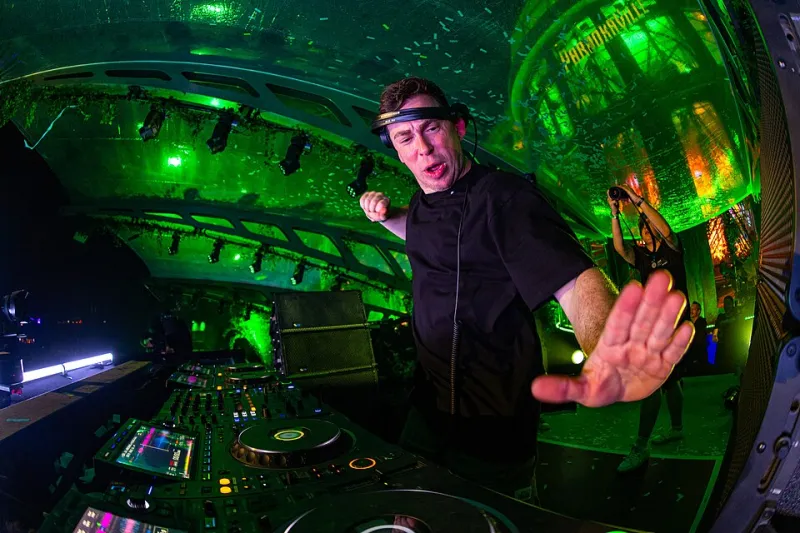
Photo: Rudgrcom, CC BY 4.0, via Wikimedia Commons
Somewhere in Atlanta, a 23-year-old named Kayla is posting her fourth TikTok of the week. It's a 58-second clip: her hands on her controller, a tight transition between a classic Larry Heard cut and a modern edit, text overlay reading "POV: you finally found a DJ who actually knows house." By morning, it has 340,000 views. By the following weekend, her inbox has three booking inquiries.
This is not an unusual story anymore. It's practically a template.
TikTok has become the most disruptive force in DJ culture since the invention of the USB drive — and the house music community is sitting right in the middle of the blast radius. For a genre that's historically been passed down through late nights, residencies, and decades of record digging, the idea that a 60-second vertical video could shortcut years of grinding feels like either a revolution or a shortcut, depending on who you ask.
The New Booking Funnel
Let's be honest about what's actually happening here. The traditional DJ career ladder — local residency, regional gigs, festival warm-up slots, slow climb to headliner — still exists. But TikTok has punched holes in every rung of it.
DJs who go viral aren't necessarily skipping the grind. But they are compressing timelines in ways that would've been unimaginable five years ago. Booking agents who once discovered talent by hanging around record shops and club nights are now, by their own admission, spending time on For You pages.
"I found three of my current clients through TikTok," says one New York-based agent who books house and electronic acts across the US and Europe, speaking on background. "Not because I was looking there — because that's where the audience was already responding. You can't ignore that signal."
The numbers back it up. DJs who build a TikTok following in the tens of thousands — not even millions — report meaningful upticks in booking inquiries, streaming numbers, and even label interest. The platform's music-adjacent algorithm is particularly good at routing house content to users who already engage with dance music, meaning the audience finding these clips tends to be genuinely interested rather than casually curious.
Who's Actually Breaking Through
The artists navigating this moment best aren't necessarily the ones posting the most. They're the ones who've figured out how to translate platform virality into real-world leverage without letting the algorithm dictate their artistic identity.
Take DJ Solaris, a 25-year-old Chicago native (she asked to use her DJ name only) who built a following of roughly 180,000 TikTok followers over 18 months by posting mix clips, crate-digging finds, and candid behind-the-scenes content from her local gigs. Last year, she played Movement in Detroit and a UK festival she'd never heard of before a promoter slid into her DMs after watching her content.
"The key for me was never chasing the algorithm," she says. "I just posted what I genuinely cared about. The house music community on TikTok is real — they know when you're being authentic and when you're performing for views."
That authenticity distinction matters enormously in a genre with deep cultural roots and a community that has historically been protective of its own. House music audiences — especially those with ties to Chicago, New York, and Detroit — have a finely tuned radar for posturing. DJs who go viral posting slick-looking content that doesn't reflect actual musical knowledge tend to get called out quickly, and not gently.
The Pitfalls Are Real
For every Solaris, there are DJs who've found the TikTok pipeline to be a genuinely complicated place to build a career.
The most common trap: optimizing your content for virality at the expense of musical depth. Short-form video naturally rewards the flashy, the immediately satisfying, the quick-hit transition — which isn't always what great house music sounds like. A genre built on patience, groove, and dancefloor dynamics doesn't always compress neatly into 60 seconds.
"I've seen DJs completely change their sound to fit what performs well on TikTok," says producer and DJ Marcus Holt, who's been part of the Detroit electronic scene for over a decade. "And then they show up to a club gig and they don't know how to read a room for two hours. The platform can create a version of you that doesn't actually exist."
There's also the burnout factor. The content treadmill TikTok demands — consistent posting, trend engagement, comment response — is a part-time job layered on top of an already demanding career. Several DJs interviewed for this piece mentioned pulling back from the platform after feeling like it was consuming more energy than the music itself.
And then there's the booking-quality question. Viral numbers attract attention, but not always from the right rooms. DJs report receiving inquiries for corporate events, brand activations, and private parties that pay well but have nothing to do with dance music culture — creating a tension between income and artistic identity.
How Clubs and Festivals Are Adapting
On the venue and festival side, the TikTok pipeline is being viewed with a mix of enthusiasm and caution.
Smaller clubs, particularly those trying to build younger audiences, have leaned into social-media-native DJs as a draw — and for good reason. A DJ with 200k engaged followers brings a built-in promotional machine that no club marketing budget can easily replicate.
Larger festivals are more measured. "We look at social presence as one data point among many," says a talent buyer for a mid-sized US electronic music festival who spoke on background. "We want to know: can this person actually hold a crowd for 90 minutes? Do they have the range? Viral clips tell us there's interest. They don't tell us everything."
The more forward-thinking clubs are actually creating infrastructure around this moment — hosting "TikTok DJ nights" that give platform-native artists a live debut, essentially bridging the gap between digital audience and physical dancefloor. It's a smart play, and early reports suggest these events perform well commercially.
The Algorithm Doesn't Know House
Here's the thing that keeps coming up in every conversation about this topic: TikTok's algorithm is agnostic. It doesn't care about the history of house music, the cultural lineage from Chicago's South Side, or the difference between a DJ who's done the work and one who just has good lighting.
That means the community itself has to hold the line on what matters — and by most accounts, it largely is. The house music corner of TikTok has developed its own informal quality filter, built from engaged listeners who know their stuff and aren't shy about saying so.
For DJs willing to engage honestly — posting real music knowledge, crediting their influences, showing the actual work — the platform can be a genuine accelerant for a career that still has to be built on substance. For those treating it as a shortcut around the culture? The dancefloor will let them know soon enough.