Four-on-the-Floor vs. Cold Steel: Inside the Culture War Splitting America's House Scene

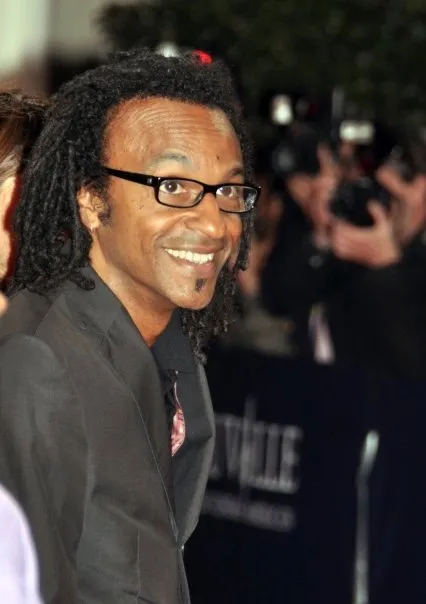
Photo: Nurken, CC BY-SA 4.0, via Wikimedia Commons
Walk into almost any mid-size US club on a Friday night right now and you might find yourself doing a double take. The DJ is playing something that feels like house — that familiar pulse, that warmth — but there's something colder underneath it. Harder. More mechanical. The synths are darker, the kicks have an industrial edge, and the crowd doesn't look like they're at a house night anymore. They look like they're at something else entirely.
That something else is the sound of two worlds colliding, and not everyone is happy about it.
The Creep Is Real
Over the last two years, techno and synth-wave aesthetics have been quietly — and then not so quietly — bleeding into house music spaces across the country. It's showing up in productions, in DJ sets, and most visibly, in club programming. Nights that once billed themselves as strictly house are now listing "house and techno" on their flyers. Resident DJs who built their names on soulful Chicago-influenced cuts are now dropping 140 BPM industrial loops between tracks.
For a lot of longtime heads, this isn't evolution. It's erosion.
"House has a specific emotional language," says Marcus Webb, a Chicago-based DJ and producer who's been active in the city's underground scene for over fifteen years. "When you start stripping that out and replacing it with cold, repetitive techno structures, you're not expanding the music — you're hollowing it out. You're taking the soul and leaving the skeleton."
Webb isn't alone. In online forums, Discord servers, and comment sections across the house music internet, a very real tension is bubbling up between traditionalists who see the genre's identity under threat and a newer wave of artists who think the blending is exactly where things need to go.
The Other Side of the Booth
Not everyone sees the techno and synth-wave influence as a hostile takeover, though. For producers like Dani Reeves, a Brooklyn-based artist who's been releasing on several prominent US indie labels, the lines were always more porous than the purists want to admit.
"House and techno came out of the same moment, the same cities, the same communities," Reeves says. "The idea that they're supposed to stay in completely separate boxes is kind of a revisionist history. People forget how much Larry Heard and early Detroit techno were in conversation with each other."
Reeves points to the commercial and critical success of artists who operate in that blurry middle space — producers whose tracks live comfortably on house playlists while incorporating synth-wave textures, cold basslines, and tempos that push well past the traditional house range. The audience, she argues, has already moved on from the genre gatekeeping.
"Kids coming up right now don't experience music in these rigid categories," she says. "They're hearing everything at once. Trying to police that is a losing battle."
Venue Owners Are Caught in the Middle
Perhaps nobody feels the squeeze more acutely than the people actually running the rooms. Club and venue operators in cities like New York, Chicago, Atlanta, and Los Angeles are navigating a tricky balancing act — trying to honor the communities that built their spaces while also staying relevant to shifting audience tastes.
Jamila Torres, who co-owns a respected underground venue in Atlanta, describes the programming decisions as increasingly complicated. "We built our reputation on house," she explains. "That's who our core audience is, that's who shows up for us week after week. But we're also seeing real demand for nights that go harder, that lean more techno or synth-wave. If we ignore that, we lose bookings. If we lean too far into it, we risk losing the people who made us."
Torres says she's tried to thread the needle by being explicit in her programming — keeping some nights strictly dedicated to house and opening up others to broader electronic programming. It's a strategy that's worked, mostly. But she acknowledges the tension hasn't fully resolved. "There are regulars who feel like we're betraying something. That's not a great feeling."
Is It Innovation or Dilution?
The argument at the heart of all this comes down to a question that's followed house music since its earliest days in Chicago and New York: what does the genre owe its origins, and how much can it change before it becomes something else?
For the purists, house music's identity is inseparable from its roots — the Black and queer communities that built it, the specific emotional and spiritual function it served, the gospel-inflected vocals and warm analog textures that made it feel like something sacred. To them, replacing those elements with the colder, more cerebral aesthetics of techno and synth-wave isn't genre evolution. It's cultural erasure dressed up as innovation.
For the progressives within the scene, that argument risks turning the music into a museum piece. House has always absorbed influences — disco, gospel, funk, Latin rhythms — and come out stronger for it. Why should techno and synth-wave be any different?
Producer and DJ Khalil Osman, who's based in Detroit and straddles both worlds by design, thinks the real issue isn't the music itself — it's who's doing the blending and why. "When artists who are genuinely rooted in the culture push the boundaries, that's growth," he says. "When labels and promoters chase a sound because it's trending with a certain demographic, that's when it starts to feel like dilution. The intent matters."
Where Does It Go From Here?
There's no clean resolution to this debate, and honestly, anyone telling you there is probably has something to sell you. Genre tensions like this have played out before — house vs. EDM, underground vs. commercial, analog vs. digital — and the music has always found a way to survive, even if the scene around it looks different afterward.
What's clear is that the conversation itself matters. The fact that producers, DJs, and venue owners are actively arguing about what house music means and who it's for is, in a weird way, a sign of vitality. Genres that nobody cares about don't generate this kind of heat.
For Marcus Webb back in Chicago, that doesn't make the stakes feel any lower. "I'm not saying nothing should ever change," he says. "I'm saying change should come from inside the culture, not from outside forces reshaping it for their own reasons. There's a difference between evolution and colonization. House people know that better than anybody."
The dancefloor, as always, will have the final say.