Built to Move: How Visionary Club Owners Are Designing Spaces That Keep You Dancing All Night
You've felt it before. That one club where everything just clicks — where the bass hits your chest at exactly the right moment, where you never feel trapped in a crowd, where somehow the line for the bathroom doesn't eat thirty minutes of your night. It doesn't happen by accident. Behind that seamless experience is a growing discipline that's quietly reshaping American nightlife: intentional venue design.
Forget the old playbook of cramming as many bodies into a converted warehouse as possible and calling it a night. A new generation of club operators — many of them deeply embedded in house and dance culture — are approaching their spaces the way architects approach buildings. Every decision, from ceiling height to bar placement to the color temperature of the lighting, is being made with the dancefloor experience at the center.
The Room Is the Instrument
Anyone who's spent time in the house scene knows that a bad room can kill even the best DJ set. Sound bounces wrong, low frequencies pile up in corners, and suddenly a technically flawless mix sounds like mud. That's why the most progressive club owners are bringing in acoustic consultants before they ever book a single act.
Spaces like Brooklyn's Nowadays and Chicago's Smart Bar have long been celebrated not just for their bookings but for how they sound. The geometry of a room — its angles, its materials, its dimensions — determines how bass frequencies travel and where mid-range detail gets swallowed. Forward-thinking venues are now treating acoustic treatment as non-negotiable infrastructure, not an afterthought.
"A properly tuned room makes a mid-tier DJ sound incredible and makes a great DJ sound transcendent," says one Chicago-based sound engineer who's worked on multiple club buildouts in the Midwest. "Most club owners don't think about it until they've already poured the concrete."
The smarter operators are thinking about it before the concrete ever gets poured.
Sightlines, Flow, and the Psychology of Space
It's not just about acoustics. The way people move through a club — or get stuck in it — has a massive effect on how long they stay and how much they enjoy themselves. Venue designers and promoters are increasingly borrowing from retail and hospitality psychology to understand how spatial flow influences mood.
One key principle: people need to feel like they have options. A dancefloor with only one entry and exit point creates bottlenecks that generate anxiety, even subconsciously. Multiple access routes, varied zones within the same space — a main floor, a more intimate back room, a covered outdoor area — give attendees a sense of agency that keeps them engaged longer.
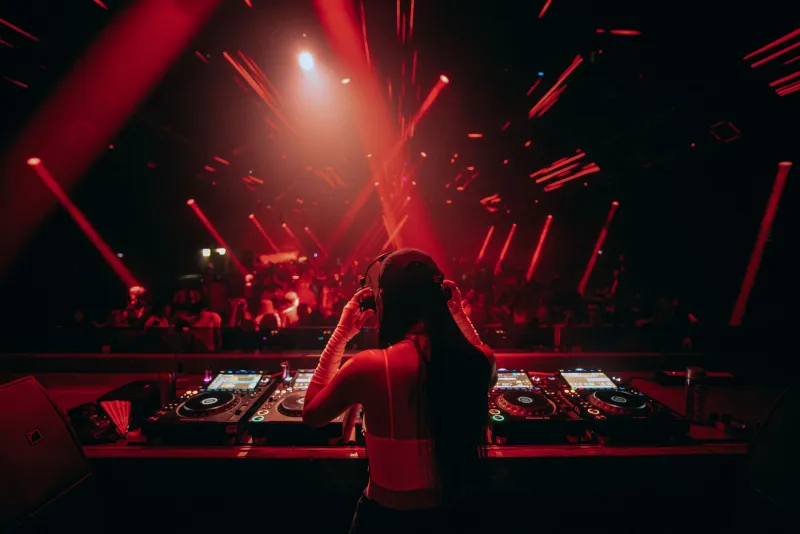
Sightlines to the DJ booth matter more than most people realize. When dancers can see the DJ, there's a feedback loop that gets established — eye contact, energy exchange, a sense of shared experience. When the booth is buried or elevated in a way that feels disconnected, that invisible thread snaps. Some of the most beloved clubs in the country, from Output in Brooklyn (RIP) to Treehouse in Miami, understood this intuitively.
The Bathroom Problem Nobody Talks About Enough
Here's the unsexy truth: a bad bathroom situation can destroy an otherwise perfect night. Long queues don't just cause frustration — they pull people off the floor, break the energy, and give attendees time to check their phones, sober up mentally, and start thinking about heading home. It's a momentum killer that most venues still treat as a logistical inevitability rather than a solvable design problem.
Progressive operators are attacking this from multiple angles. Gender-neutral bathrooms — beyond their obvious inclusivity benefits — tend to distribute traffic more efficiently. Staggered bathroom locations throughout a venue, rather than one central block, prevent the single-queue disaster. Some newer clubs are even experimenting with bathroom placement that keeps patrons physically closer to the main floor, so the return trip is shorter and the pull back to the music is stronger.
The operators who've cracked this aren't just being thoughtful about inclusion. They're being smart about retention.
Lighting as Emotional Architecture
The lighting conversation in nightlife usually starts and ends with lasers and strobes. But the most considered venue designs are thinking about light in a much more nuanced way. The transition from the street into the club — the decompression zone — benefits from lower, warmer light that signals a shift in environment. The main floor's lighting should serve the music, not compete with it.
Some venues are also thinking about how lighting affects the perception of crowd density. A well-lit room that looks sparse feels deflating. Strategic use of shadow and focused lighting can make a half-full floor feel intimate rather than empty — which matters enormously on slower nights or during early hours when the room hasn't reached capacity yet.
This isn't manipulation. It's hospitality. Creating conditions where people feel comfortable enough to let go is the whole point.
The Promoter as Experience Architect
What's emerging from all of this is a new kind of role in the nightlife ecosystem. The best promoters are no longer just talent buyers and social media managers. They're experience architects — people who think holistically about every touchpoint between a patron walking through the door and leaving at 4 AM.
That means thinking about the door experience (how long is the line, how is the staff interacting with guests), the transition from entry to floor, the acoustics, the sightlines, the bathroom situation, the bar layout, the lighting, and even the way the night ends. A clean, respectful close — good lighting up, staff who treat departing guests with the same energy as arriving ones — leaves a lasting impression that drives return visits.
Venues like Smartbar, Nowadays, and The Midway in San Francisco have built cult followings not just because of who they book, but because of how the whole night feels. That feeling is designed. It's intentional. And it's increasingly becoming a competitive advantage in a nightlife market where good music alone isn't enough to stand out.
Why This Matters for House Culture
House music has always been about more than tracks — it's about communal experience, about bodies in a room moving together toward something. The dancefloor is a sacred space in this culture, and the room that holds it deserves the same level of craft and intention that goes into the music itself.
As more independent promoters and club owners enter the scene with genuine passion for the culture, the ones who think beyond the booking sheet are the ones building something lasting. The bathroom line, the speaker placement, the way the light hits the floor at 2 AM — these aren't small details. They're the architecture of the feeling people chase every weekend.
And when you get it right? People don't just come back. They bring everyone they know.