First on the Decks: How Opening DJs Became the Secret Architects of a Perfect Night
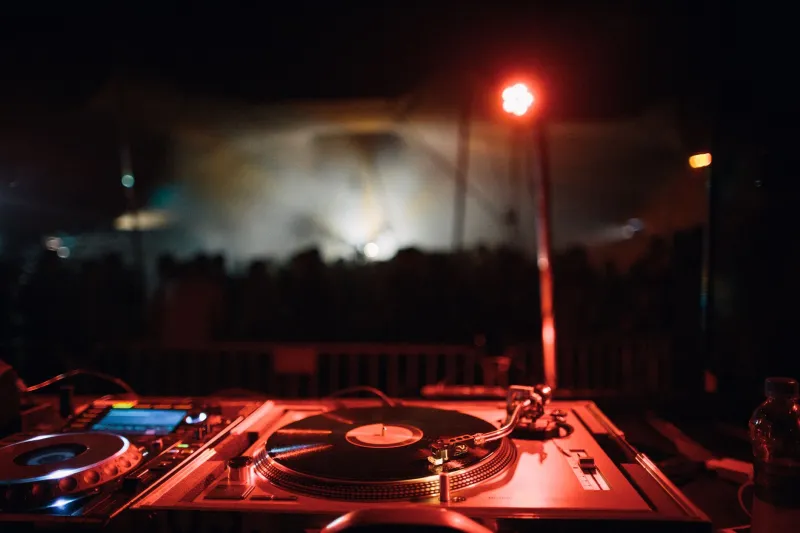
The doors crack open at 10 PM. Maybe thirty people trickle in, coats still on, drinks freshly ordered, conversations louder than the speakers. Somewhere behind the booth, a DJ nobody asked about fires up their first track.
This is the opener's world. And honestly? It might be the hardest job in house music.
While headliners get the Instagram posts, the rider negotiations, and the late-night crowd already primed and ready to move, opening DJs are working a completely different kind of magic. They're coaxing energy out of nothing. They're reading a room that hasn't decided yet whether it wants to be read. And increasingly, they're doing it with a level of craft and intentionality that's starting to turn heads across the US house scene.
The Empty Room Is Its Own Instrument
Ask any seasoned opener and they'll tell you the same thing: a half-empty dancefloor isn't a problem to solve, it's a canvas to work with.
"Most DJs are terrified of playing to a sparse crowd," says Chicago-based DJ and producer Mara Vex, who's opened for some of the city's heaviest hitters at spots like Smart Bar and The Mid. "But I love it. You get to actually shape the energy from scratch. Nobody's locked into a vibe yet. That's freedom."
That freedom, though, comes with serious responsibility. The opening set doesn't just warm up the crowd — it sets a sonic vocabulary for the entire evening. The tracks you play at 10:30 PM create expectations, establish a mood, and in some ways, prime the audience to receive the headliner's set in a specific emotional register. Get it wrong, and the whole night can feel off-kilter. Get it right, and the headliner walks into a room that's already alive.
It's a form of invisible architecture. And very few people in the crowd will ever know you built it.
Obscure Records as a Secret Weapon
One of the defining characteristics of a great opening set is restraint — specifically, the restraint to not play your biggest weapons too early. But there's an art to what you do play instead.
Many of the country's most respected openers have built reputations on their ability to dig deep. We're talking cuts that haven't been played out in years, regional pressings from defunct labels, deep Chicago jack tracks that predate most of the crowd's awareness of house music entirely. These records serve a dual purpose: they keep the energy low-and-slow enough to let the room breathe, while also establishing the opener as a genuine tastemaker rather than a glorified playlist shuffler.
Denver-based DJ Kofi Amara, who's made a name for himself opening at Meow Wolf events and local underground nights, puts it plainly. "I want to play records that the headliner would never play. Not because I'm trying to outshine them — but because those two hours before they go on are mine. That's my set. My story."
This mentality is shifting how younger DJs think about the role entirely. Rather than treating an opening slot as a stepping stone to be endured, they're treating it as a distinct discipline — one with its own techniques, its own aesthetic standards, and its own ceiling for excellence.
The Mixing Techniques Nobody Talks About
Beyond track selection, openers are developing a whole toolkit of mixing approaches specifically suited to early-night crowd psychology.
Long, slow blends that stretch transitions over four or five minutes keep the energy gradual and hypnotic. Dropping into unexpected genres — a touch of ambient, a hint of Afrobeat, a brief detour through deep dub — can snap a distracted room into focus without spiking the BPM prematurely. Some openers swear by keeping the bass lighter early on, letting the mid-range frequencies carry the mood while the sub stays restrained until the room fills out and the body heat starts building.
New York-based DJ Priya Solano, who regularly opens at Brooklyn venues including Nowadays and a handful of invite-only loft parties in Bushwick, describes her approach as "tidal." "I think of the energy like water," she explains. "It needs to rise slowly, not crash. My job is to make sure that by the time the headliner drops their first track, the crowd is already at chest-level. They just don't know it yet."
This kind of nuanced pacing is something that even seasoned headliners often acknowledge they can't replicate. Opening is its own muscle, and it only develops through repetition in the specific conditions of the early-night room.
Booking Agents Are Finally Catching On
For a long time, the economics of opening slots were pretty grim. Flat fees, short sets, zero billing on the flyer — opening was something you did to get your foot in the door, not something you built a career around.
But that's changing, slowly and meaningfully, across the US market.
Several mid-size booking agencies operating in Chicago, New York, and Los Angeles have started actively cultivating rosters of what they're internally calling "specialist openers" — DJs who are specifically sought out for their ability to set a room rather than headline it. These aren't consolation bookings. They're intentional pairings, where the promoter is thinking carefully about who opens and why.
"We've started having real conversations with promoters about the opening slot the same way we'd talk about the headliner," says one agent based in Chicago who asked to remain anonymous. "There are DJs on our roster who make more per hour opening than some mid-tier headliners make closing. The market is recognizing that skill."
The fees are still catching up to the respect, admittedly. But the cultural shift is real. Social media has played a role — opening sets that get recorded and posted are finding audiences online who weren't even in the room, building followings for DJs who previously operated entirely in the shadows of whoever followed them.
The Opener as Tastemaker
Perhaps the most exciting development in all of this is the way opening DJs are beginning to function as genuine tastemakers within their local scenes. Because they're not beholden to playing recognizable records or satisfying a crowd already peaked on energy, they have more freedom to introduce unfamiliar music. And when that music lands — when a record played at 10:45 to a half-empty room somehow becomes the track everyone's talking about the next day — that's a different kind of power than closing to a packed floor.
Mara Vex puts it best: "The headliner gets the credit. But I'm the one who planted the seeds."
There's a whole underground economy of taste operating through opening sets across the US right now. Records get broken in those early hours. Artists get discovered. Sounds get introduced to rooms that go on to shape entire regional scenes.
So next time you show up early to a house night — and you should, genuinely — put down the phone, step onto the floor, and actually listen to whoever's behind the decks. They might just be the most important person in the building.