From Slack Notifications to Sub-Bass: How Corporate Wellness Is Accidentally Minting House Music Fans
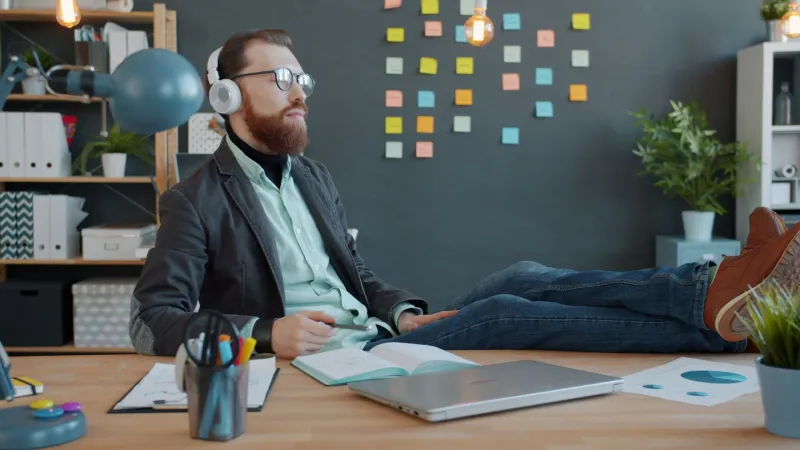
Somewhere between a guided breathing exercise and a third cup of cold brew, a 34-year-old marketing manager in Austin, Texas discovered deep house music. Not at a warehouse party. Not through a friend with a record collection. Through a corporate wellness app her company mandated she download after open enrollment.
She's not alone.
Across the US, a quiet and frankly kind of hilarious pipeline has been opening up — one that's routing ordinary nine-to-fivers straight into the sonic world of house music without them ever setting foot near a club. Workplace meditation platforms, branded wellness retreats, stress-relief Spotify playlists licensed by HR departments, and ambient background music in coworking spaces are all quietly doing what years of music press and festival marketing couldn't: introducing the textures of deep house, ambient techno, and downtempo electronic music to a massive mainstream audience.
And the scene is just now starting to notice.
The Playlist That Started It All
It's worth understanding how the licensing side of this works, because it's less about intentional curation and more about cost and vibe. Deep house and ambient electronic tracks — particularly those without vocals — are affordable to license, loop-friendly, and broadly perceived as "calming" by music supervisors who may not know a Roland TR-909 from a rain sounds YouTube video.
"We've had tracks placed in mindfulness apps, corporate onboarding videos, even a Fortune 500 company's internal mental health portal," says one Chicago-based producer who asked to remain anonymous because, in their words, "I don't want my techno heads knowing I'm scoring HR content." They laugh, but the royalty checks aren't a joke. "It's consistent money. And every once in a while someone DMs me through Bandcamp saying they found me through a meditation app. That's wild to me."
Wildness aside, this is a real phenomenon. Platforms like Calm, Headspace, and a dozen smaller corporate wellness apps have been quietly building out their music libraries with electronic and ambient content for years. The genre fits the brief — low vocals, repetitive structure, evolving textures — and producers who understand that aesthetic are landing placements without ever pitching a traditional sync deal.
LinkedIn Is the New Dancefloor (Sort Of)
If the licensing side is the supply chain, LinkedIn is where the demand is getting manufactured. Corporate culture has a complicated relationship with "authenticity," and right now, the aesthetic of deep house — thoughtful, atmospheric, slightly underground — maps perfectly onto how a certain class of professional wants to present themselves online.
Wellness influencers and productivity coaches on LinkedIn are regularly posting "focus playlists" and "flow state" content that borrows heavily from electronic music culture. Terms like "deep focus," "binaural beats," and "ambient work music" dominate the algorithm, and more than a few of these playlists are just... deep house. Sometimes labeled as such, sometimes not.
"I had a post go semi-viral last year where I shared a playlist I use when I'm in a creative flow," says Dani Reyes, a brand strategist in New York who moonlights as a promoter for smaller house events in Brooklyn. "Half the comments were people asking what genre it was. These were professionals in their 30s who genuinely had no idea this music existed outside of, like, a yoga class."
Reyes says she's noticed a tangible uptick in first-timers at her events who found her through Instagram after following a wellness account that mentioned the music. "They come in a little unsure, but they stay. The music does the work."
The Retreat-to-Rave Conversion
Corporate retreats have become another unexpected on-ramp. As companies invest more in employee experience — especially post-pandemic, when keeping remote workers engaged became a genuine HR crisis — the music choices at these events have gotten more sophisticated. Gone are the days of a DJ spinning top 40 at the company holiday party. Increasingly, brands are hiring DJs who specialize in background-to-foreground electronic music: sets that start ambient and build slowly, designed to hold a room without demanding attention.
"I've done probably fifteen corporate events in the last two years," says DJ and producer Marcus Elwell, based in Atlanta. "And every single time, at least a few people come up afterward and ask me what I was playing. They're genuinely curious. Some of them follow me on Instagram. A few have actually shown up to real gigs."
Elwell is careful not to oversell the conversion rate. "Most of them probably go home and forget about it. But some don't. And those are real fans now — people who came in through a completely different door than I did."
That different door is worth thinking about. The traditional pathway into house music culture — especially in the US — runs through specific cities, specific scenes, specific social networks. Chicago's South Side. Detroit's underground. New York's queer ballroom-adjacent spaces. These are not just geographic markers; they're cultural ones. The wellness pipeline bypasses all of that context, which raises real questions about what gets transmitted and what gets lost.
What the Scene Gains — and What It Risks
The optimistic read is straightforward: more listeners, more revenue for producers, more diverse audiences at events. House music has always been about inclusivity in theory, even when the practical reality of nightlife has been exclusionary. If corporate America is accidentally doing outreach work, maybe that's fine.
But promoters who've spent years building intentional communities around this music are more cautious. "There's a difference between someone discovering the music and someone understanding the culture," says Jasmine Okafor, who runs a queer-focused house night in Philadelphia. "Deep house didn't come from a wellness app. It came from Black and queer communities who needed a space. That context matters."
Okafor isn't opposed to new listeners finding their way in — quite the opposite. But she's thoughtful about what kind of education accompanies the discovery. "If someone finds deep house through a meditation app and then just buys tickets to a major festival without ever engaging with the actual community that built it, something got lost in translation."
That translation problem is real, and it's on the scene to address it. Producers, promoters, and media (hey, that's us) have a role in making sure the history and the culture travel alongside the music, even when the music is showing up in unexpected places.
The Accidental Audience Is Already Here
Ready or not, the corporate wellness machine has already sent a wave of new ears toward house music. Some of those ears will stay curious. They'll dig deeper, find the records, show up to the smaller rooms, and become genuine participants in the culture. Others will move on to the next productivity trend.
But the producers licensing their tracks to mindfulness platforms, the DJs getting booked for company retreats, and the promoters noticing unfamiliar faces at their events all agree on one thing: the pipeline is real, and it's not going away.
The breakroom, apparently, is now part of the funnel. Use it wisely.