Wax On, Watts Up: How Vinyl Is Reclaiming the House Music DJ Booth
There's a moment that Chicago-based DJ and selector Marisol Vega describes as almost spiritual. She's playing a deep house set at a small Logan Square venue, and she drops the needle on a 1987 Larry Heard pressing. The crowd doesn't just move — they lean in. Someone near the front closes their eyes. "You can feel the room shift," she says. "Digital doesn't do that. There's something in the grain of the record that people respond to even if they can't name what it is."
Vega isn't alone. Across the United States, a growing number of house DJs and producers are ditching their all-digital rigs — or at least supplementing them — with turntables, needle cartridges, and crates stuffed with wax. In a culture that has spent the better part of a decade optimizing for convenience, streaming libraries, and laptop portability, the analog revival feels almost countercultural. Which, honestly, might be exactly the point.
The Digital Ceiling
For most of the 2010s, the conversation around DJ technology was one-directional. Controllers got smarter. Software got more powerful. Serato and Rekordbox made mixing accessible to anyone with a laptop and a decent pair of headphones. The barriers came down, and the scene expanded — which was genuinely good for house music's reach.
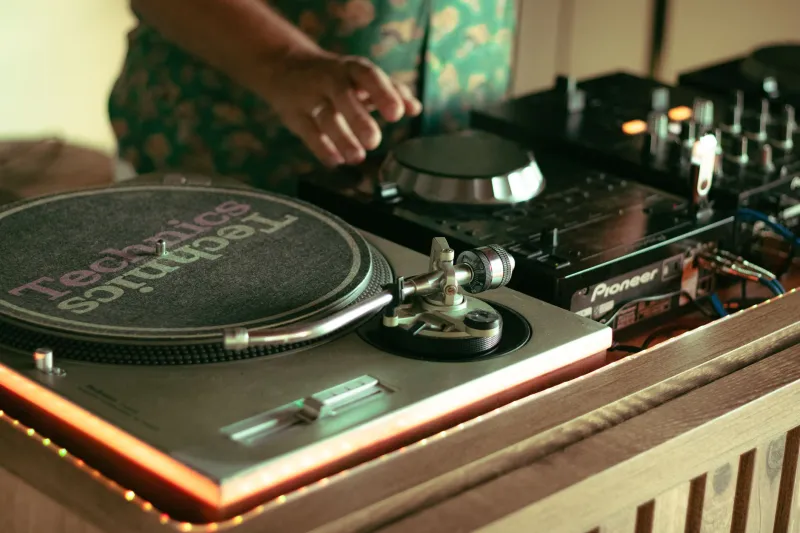
But something got lost in the compression, and not just sonically. "When everything sounds clean and perfect, nothing sounds alive," says Detroit-based producer and DJ Marcus Okafor, who started his career on CDJs before rebuilding his setup around two Technics 1200s in 2021. "I was bored of my own sets. Every transition was surgical. There was no risk."
That risk-reward tension is central to why turntablism is pulling people back. Vinyl demands physical engagement — reading a room while also reading a label, managing pitch manually, dealing with the occasional skip. It reintroduces stakes into a practice that digital tools had, in some ways, made too easy. And for house music, a genre built on feel and floor energy, that tactile unpredictability turns out to be a feature, not a bug.
Gen Z Is Buying Turntables
Here's the twist that nobody in the industry saw coming: it's not just veteran selectors rekindling a love affair with wax. Younger producers — many of whom came up entirely in the streaming era — are dropping serious money on turntable setups without any nostalgia to fuel the purchase.
Take Jaylen Briggs, a 24-year-old producer from Atlanta who started making house music on Ableton at 17. Last year, he spent close to $1,500 building his first vinyl setup. "I didn't grow up with records," he admits. "But I started digging through crates at a spot in Little Five Points and realized I was hearing things I'd never heard in any digital library. The mastering, the analog warmth — it changed how I think about production."
Briggs now presses his own music to vinyl through a small Atlanta-based independent pressing plant and sells limited runs directly through his Instagram. He sells out every time. "People want to hold something," he says. "They want a physical connection to the music."
This sentiment is echoing across cities. In New York, record shops in Bushwick and Ridgewood are reporting upticks in younger customers specifically seeking house, techno, and deep house 12-inches. In Los Angeles, DJ collectives are organizing vinyl-only nights where digital gear is literally banned from the booth. The exclusivity isn't gatekeeping — it's curation. It's a statement.
The Underground Economy of Wax
The vinyl comeback isn't just a vibe shift. It's creating a real, if niche, economic ecosystem. Independent pressing plants — many of which nearly shuttered during the pandemic when major label orders dried up — are now fielding more requests from small house labels and independent artists than at any point in recent memory.
Plants like Gotta Groove Records in Cleveland and Smashed Plastic in Chicago have become essential infrastructure for a new wave of boutique house labels that want to press physical product without going through major distributors. Wait times are long — sometimes stretching six months or more — but producers are planning around it, treating a vinyl release the way a previous generation might have treated a proper album rollout.
"We've seen a massive spike in first-time clients who are house producers," says one production coordinator at a Midwest pressing facility who asked not to be named. "These aren't legacy labels. These are bedroom producers who want 300 copies pressed and a proper sleeve. That's a different kind of customer, and it's a good problem to have."
Specialty distributors are adapting too. Record pool services that once focused purely on digital promos are starting to reintroduce physical components. Some are even curating subscription-based vinyl services aimed specifically at house DJs — a kind of modern take on the classic record pool model that helped build Chicago and New York's scenes in the first place.
Sound Quality or Mythology?
Not everyone is convinced the audio argument holds up under scrutiny. Some engineers and producers will tell you that a well-mastered digital file on a high-end system sounds just as good — arguably better — than analog playback through mid-range equipment. The "vinyl sounds warmer" debate has been relitigated endlessly in production forums, and the consensus is genuinely murky.
But the house community seems increasingly unbothered by the technical argument. "It's not just about fidelity," says Vega. "It's about the ritual. Cleaning the record, cueing it up, feeling the groove under your fingers — that process puts you in a different headspace before you even play the first note. That headspace comes through in the set."
There's also a social dimension that streaming simply cannot replicate. Crate digging is inherently communal. You find records at swap meets, in basement collections, at shops where the owner knows your taste and pulls things for you. That human infrastructure — built around shared knowledge, taste, and generosity — is part of what made house music's original scenes so durable. The vinyl revival is, in a real sense, rebuilding those webs of connection.
Going Backward to Move Forward
The irony of the moment isn't lost on the DJs living it. House music has always been about the future — it was born in Chicago as a radical reimagining of what Black queer nightlife could sound like, what the dancefloor could mean. And yet here it is in 2025, finding its most forward-thinking practitioners reaching back into the crates.
Maybe that's not a contradiction. Maybe the most radical thing you can do in a culture of infinite digital playlists and algorithmic recommendations is slow down, hold something physical, and choose it deliberately. One record at a time. One dancefloor at a time.
Marisol Vega is already planning her next set. She just found a mint condition copy of a mid-90s garage house record she's been hunting for two years. She's not telling anyone what it is until she drops it.
That's the thing about vinyl culture. The surprise is still sacred.