Pass the Torch, Keep the Fire: How House Music's OGs Are Lifting the Next Wave Without Holding the Door Shut

For a long time, house music had a reputation for operating like a secret society. You either knew somebody, or you spent years knocking on doors that never quite opened. The unspoken rule was that knowledge was currency, and currency didn't get shared freely. But something has shifted. Across Chicago, Detroit, New York, and the cities quietly building their own scenes in between, a different kind of relationship is forming between the people who built this music and the people who are about to carry it forward.
It doesn't look like a formal program. There's no application, no certificate, no branded mentorship pipeline with a corporate sponsor slapped on it. It looks like a text message at midnight asking if it's cool to come by the studio. It looks like a veteran DJ pulling a younger producer aside after a show to talk about the mix that almost worked but didn't. It looks like trust being extended before it's been fully earned, because somebody did that for them once and they never forgot it.
Why Now?
A few forces are converging to make this moment different from anything the scene has seen before. The pandemic reshuffled priorities in ways that are still playing out. A lot of established artists spent those locked-down years thinking hard about legacy — what they'd built, who they'd brought along, what would survive them. When clubs reopened, many of them came back with a different orientation. Less focused on protecting position, more focused on what the culture actually needs.
At the same time, the generation coming up right now is unusually visible. Social media has collapsed the distance between bedroom producers and the artists they grew up listening to. A 22-year-old in Atlanta can drop a mix on SoundCloud, tag a legend in the comments, and genuinely get a response. That accessibility has opened channels that simply didn't exist fifteen years ago, and some of the veterans who came up grinding in near-total obscurity are using those channels deliberately.
"I had to figure everything out on my own, and honestly it cost me years," says one Chicago-based producer who's been active since the late nineties and now regularly hosts listening sessions for emerging artists out of his home studio on the South Side. "Why would I want that for someone else? The music gets better when more people understand what they're doing."
Studio Time as Sacred Space
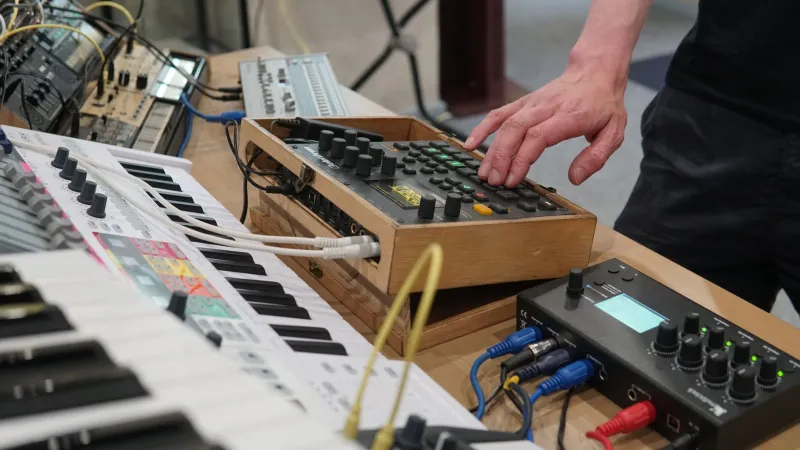
One of the most meaningful ways this mentorship is showing up is in shared studio time — not as a transaction, but as a genuine creative exchange. Veterans are inviting younger producers into their sessions not to supervise or lecture, but to work alongside them. The dynamic is less teacher-student and more like a seasoned musician sitting in with a younger band. Everybody learns something.
What gets transmitted in those rooms is hard to quantify. It's the difference between knowing the technical specs of a compressor and knowing when not to touch it. It's understanding how a track needs to feel on a specific sound system at four in the morning versus how it sounds in headphones at two in the afternoon. That kind of knowledge lives in the body after years of experience, and it doesn't transfer through YouTube tutorials.
Producers who have gone through these informal sessions talk about them in almost reverent terms. The access to institutional memory — the actual story of how sounds were made, how labels operated, how deals went wrong — is something no online course can replicate. And the veterans doing the sharing often describe it as energizing rather than depleting. The enthusiasm of someone encountering a piece of gear or a technique for the first time has a way of making a seasoned artist hear it fresh again.
Residencies as Real Investment
Beyond the studio, some established DJs are using their booking leverage to create actual runway for younger artists. Rather than treating opening slots as filler, they're being intentional about who gets those spots and what happens after. A few are negotiating directly with venues to build residency structures that give newer DJs consistent time to develop their sound in front of a real crowd — something that's genuinely rare and genuinely valuable.
A residency does something a one-off gig can't. It gives an artist time to fail, adjust, and grow in a specific room with a specific audience. It builds a local following that actually knows your name. For a lot of the house DJs who built careers in the eighties and nineties, residencies were the foundation everything else stood on. The fact that some of them are now engineering that same foundation for someone else is not a small thing.
Venue owners who are part of this shift say the approach has tangible benefits beyond the altruistic ones. A well-mentored young DJ who's been given real room to develop is a more reliable draw than a rotating cast of unknowns. The investment pays off in the room.
Honest Conversations Over Hype
Maybe the most underrated part of what these veterans are offering is the willingness to tell the truth. The music industry has always run on hype, and the house world is no exception. But the artists who have navigated decades of label politics, shifting trends, and the financial reality of building a career in underground music have a perspective that cuts through the noise.
They're telling younger artists about the contracts that looked good and weren't. About the gig opportunities that seemed like big breaks and led nowhere. About the importance of owning your masters, building your own list, and never letting your entire livelihood depend on one platform or one relationship. This is the kind of career infrastructure knowledge that used to get hoarded, and it's now being passed around with a generosity that feels new.
There's also an emotional honesty in these exchanges that matters. Younger artists in a scene that's increasingly mediated by social performance often feel like they're not allowed to admit uncertainty or struggle. Veterans who are willing to say "I didn't know what I was doing either, and here's what that cost me" are giving something that can't be streamed or downloaded.
What the Culture Gets Back
The ripple effects of this shift are already audible if you're paying attention. Tracks are coming out of these mentorship relationships that have both technical polish and genuine feeling — the kind of combination that's actually hard to manufacture. New voices are finding their footing faster, with less of the wasted time and misdirection that used to be a standard part of the initiation process.
But the deeper return is cultural. House music has always been, at its core, about community. About a floor full of people who found each other in the dark and moved together. The mentorship culture that's emerging right now is an extension of that same impulse — experienced people choosing to move with younger ones instead of in front of them.
The torch doesn't go out when you hand it to someone else. If anything, it burns a little brighter. And right now, across the US house scene, a lot of people who spent years earning their light are finally starting to share it.