Closets, Garages, and Basements: The Unlikely Studios Behind House Music's Most Authentic Sounds
There's a certain mythology around the professional recording studio — the soundproofed walls, the massive mixing console, the engineer in a rolling chair sipping cold brew. For a long time, that image was the gold standard, the place where "real" music got made. But spend any time talking to the producers currently driving house music's most exciting creative corners, and you'll hear a very different story.
The record that moved you last summer? There's a decent chance it was tracked in a converted two-car garage in suburban Atlanta. That deep, hypnotic groove you can't stop listening to? Possibly assembled in a walk-in closet in a Chicago three-flat, egg cartons stapled to the drywall, HVAC cranked down to kill the hum. House music has always had a DIY bloodline running through it — that's not new. What is new is just how sophisticated the results have become, and how many producers are actively choosing to stay in these scrappy spaces even when better options exist.
The Real Estate Problem Nobody Talks About
Studio rental rates in major US cities have gotten genuinely brutal. In New York, Los Angeles, and Chicago — three cities central to house music's evolution — hourly studio rates for a decent room can run anywhere from $75 to $300 depending on the neighborhood and the gear on offer. For a producer grinding out tracks on a tight budget, that math falls apart fast. Even producers with label deals or sync income often can't justify the overhead of a dedicated commercial space.
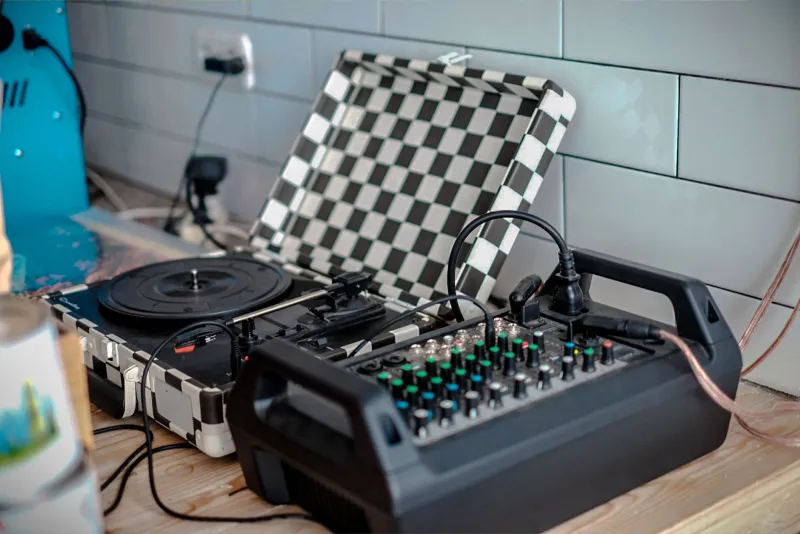
So people get creative. A spare bedroom becomes a control room. A finished basement turns into a full production suite. A detached garage gets insulated, wired, and quietly transformed into something that would make a gear-head weep with joy. The results aren't always acoustically perfect. But increasingly, that imperfection is becoming part of the point.
"My low end is a complete mystery in my space," admits one Chicago-based producer who's put out records on three respected house labels in the last two years, all tracked in a basement that shares a wall with a water heater. "I've learned to reference everything on headphones and in my car. At this point, I trust my ears more than I trust any room I've ever worked in."
Limitation as Creative Engine
There's a well-worn argument in music production circles that constraints force creativity, and nowhere does that feel more true than in the world of home studio house music. When you can't afford to fix a problem acoustically, you start working with the problem. When your recording window is 11pm to 2am because your neighbors work early, you develop a nighttime workflow that shapes the energy of what you're making.
Producers working in shared apartments talk about the discipline that comes from having to keep things quiet — learning to build tracks that hit hard in headphones, developing an intimacy with their DAW that producers with unlimited studio access sometimes never find. There's something almost meditative about that kind of focused, constrained work.
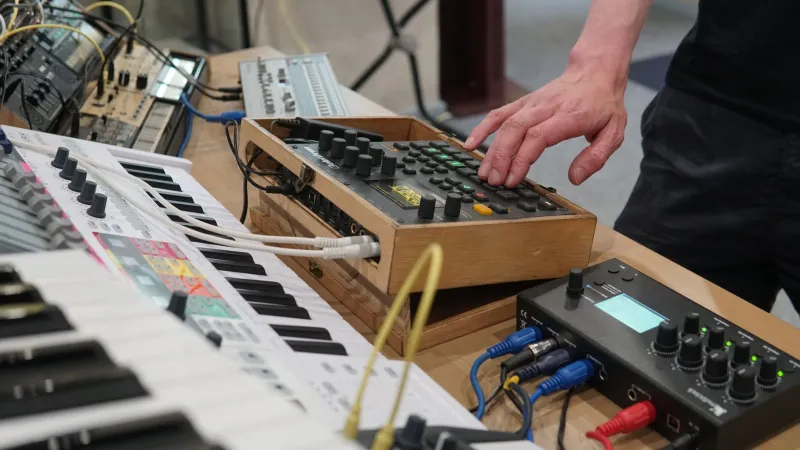
One Brooklyn-based producer, who's been running her operation out of a converted coat closet for four years, describes her setup as "aggressively intentional." Her closet studio — roughly four feet by six feet, lined with acoustic foam she cut herself — has exactly one monitor on a makeshift stand, a small MIDI keyboard, and a laptop. Her last EP got picked up by a well-regarded Berlin label and earned her a spot on a Boiler Room lineup. The closet didn't hold her back. It made her ruthless about editing, about keeping only what mattered.
"When you don't have space to sprawl, you can't hide behind complexity," she says. "Every element in a track has to earn its place. I think that's why my music sounds the way it does."
Navigating the Noise Wars
Of course, not every challenge is philosophical. Plenty of home studio producers are fighting very practical battles — namely, neighbors who don't share their enthusiasm for 4am kick drum sessions.
Noise ordinances vary wildly by city and municipality, but most residential zones in the US have some version of a quiet hours policy, typically kicking in between 10pm and 11pm. For producers who work best at night — and in house music culture, that's a lot of them — this creates a genuine operational headache.
The solutions people have landed on are genuinely inventive. Mass-loaded vinyl barriers layered behind drywall. Drum triggers instead of acoustic kits. Subwoofer isolation platforms built from tennis balls and plywood. Headphone mixes that are so dialed in they've become a signature part of certain producers' workflow. Some producers have built floating floors in garages — a full room-within-a-room construction that decouples the floor from the slab and dramatically cuts low-frequency transmission.
A Detroit-based producer who runs a small collective out of his garage describes the process of acoustic-treating the space as its own kind of creative project. "I spent three months just figuring out the room before I even tried to make music in it. Bass traps in every corner, clouds over the mix position, diffusers on the back wall. It became obsessive. But now I actually know what I'm hearing, and that's everything."
The Gear That Makes It Work
The home studio revolution in house music has been massively accelerated by how good affordable gear has gotten. A producer today can build a genuinely capable recording and production setup for well under $2,000 — a figure that would have seemed absurd a decade ago. Audio interfaces from companies like Focusrite and Universal Audio have democratized clean signal paths. Nearfield monitors from Adam Audio and Yamaha give producers accurate playback in small rooms. Plugin technology has reached a point where a well-chosen software suite can replicate virtually any hardware processing chain.
But the producers thriving in these unconventional spaces will tell you that gear is secondary to ear training and workflow. Knowing how to listen critically, how to translate what you're hearing in an imperfect room to how a track will sound on a club system — that skill is earned over time, not purchased.
"The gear helps, but it doesn't solve the fundamental problem of learning to make decisions without perfect information," says the Brooklyn closet producer. "You have to make peace with uncertainty and commit anyway. Honestly, I think that's what makes house music feel alive. Nobody's perfectly certain. You just go."
Why the DIY Aesthetic Is Here to Stay
There's a cultural dimension to all of this that goes beyond economics or practicality. House music was born in the margins — in Chicago's Black and queer communities, in spaces that were never designed for music, in a spirit of radical self-determination. The current wave of producers making boundary-pushing work out of garages and basements and closets isn't just making do. In many ways, they're honoring that lineage.
The listener can feel it, too. There's a texture to music made in imperfect spaces, a kind of warmth and grit that pristine commercial studios sometimes sand away. When a track feels lived-in, when it sounds like it came from somewhere real, people connect with it differently.
The house music scene has always understood that the most important studio upgrade you can make is to your ears, your instincts, and your commitment to the work. The room is just the room. The music is something else entirely.